
Signs you need this
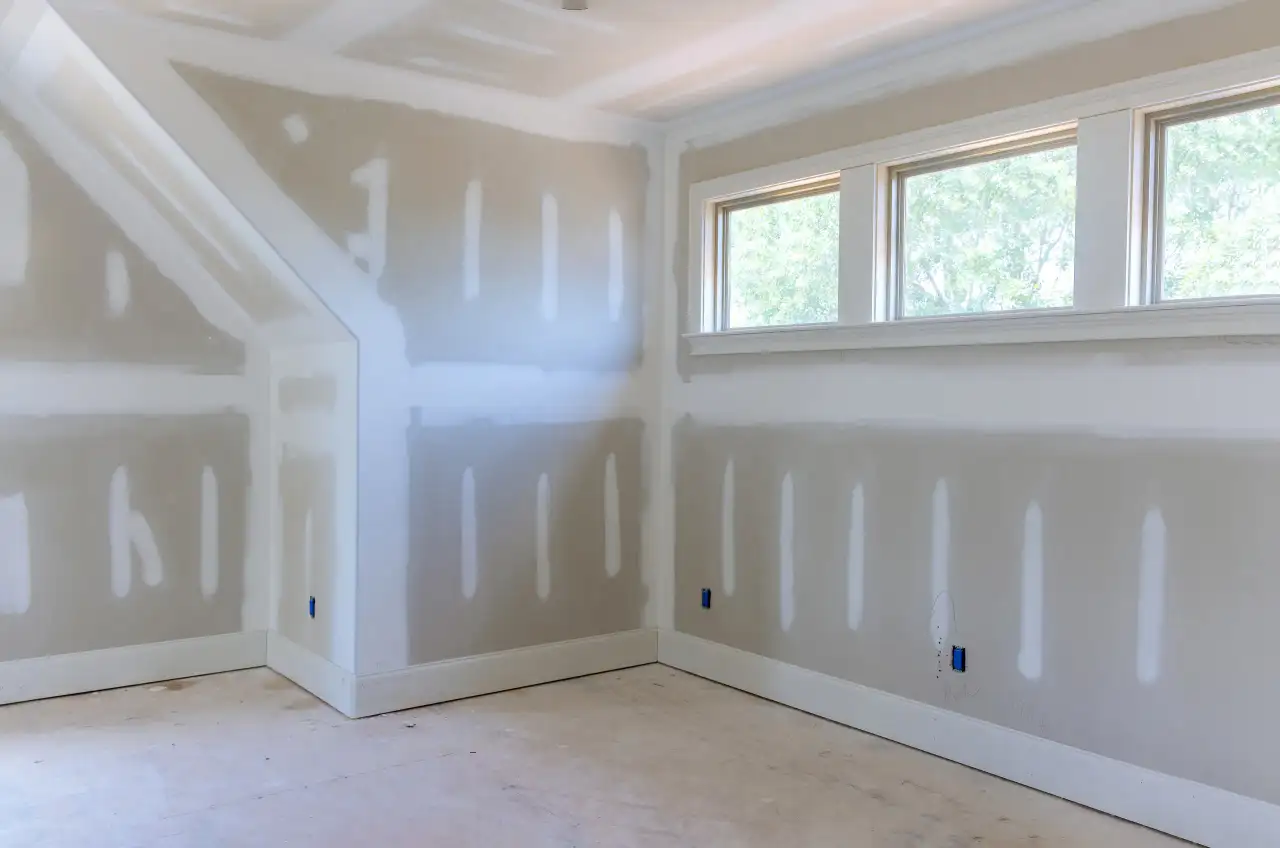
- • Board is hung and fastened, but every seam, screw dimple, and corner is still visible, and the wall isn't paintable yet
- • A general contractor or a homeowner who hung their own board doesn't have a finishing crew and needs the mud, tape, and sanding done to a paint-ready surface
- • A landlord or property manager has a unit with board back up after a renovation and needs it finished fast to get the unit back on the rental market
Finishing Is Where a Wall Either Disappears or Gives Itself Away
Once board is hung, the wall isn’t done, it’s just ready for the stage that actually determines how it looks once painted. Taping and finishing is the difference between a wall with visible seams and screw dimples and one that reads as a single flat surface. Springfield Elite Drywall & Plaster takes on finish-only work constantly, picking up after a general contractor’s framing crew, a hanging sub working a split scope, or a homeowner who hung board themselves and wants a professional result on the finish. The board itself, whoever hung it, is only half the job; the finish is what a homeowner or tenant actually sees and touches every day.
Starting With an Honest Look at the Hang
Before any tape goes up, the underlying hang gets inspected. Proud screws that weren’t seated below the paper surface, uneven seams where board thickness or framing wasn’t quite flush, and gaps at corners all take more compound and more sanding to bring level, and skipping that inspection is how a finish job runs into surprises halfway through. Springfield Elite Drywall & Plaster flags these issues up front, whether the hang was done by its own crew, another contractor, or a homeowner’s DIY effort, so the finish scope and timeline reflect what’s actually there rather than an assumption of a clean hang.
The Coats That Build a Flat Wall
Taping starts with embedding tape, either paper tape or FibaTape mesh, into a first coat of joint compound at every seam and inside corner, with corner bead run along outside corners to protect them and give the finisher a straight edge to work to. That first coat is followed by at least two more, each wider than the last, feathering the seam out until it blends into the surrounding board with no visible ridge or step. Sanding between coats knocks down high spots and ridges before the next pass goes on. Rushing this sequence, using too few coats or not feathering wide enough, is what produces the shadow lines and visible seams homeowners notice once paint goes on and the light hits the wall at an angle.
Matching the Finish Level to the Room
Not every wall needs the same amount of work. A Level 4 finish, taped and coated seams sanded smooth under flat paint, is the standard for most bedrooms, hallways, and rooms with even, diffuse lighting. A Level 5 finish adds a thin skim coat of joint compound across the entire surface, not just the seams, which is what a wall under a window’s raking light or a ceiling lit by recessed can lighting needs to hide every seam and minor texture variation. Springfield Elite Drywall & Plaster reads the lighting in a room before recommending a finish level, since applying Level 5 everywhere adds cost without benefit in rooms where it won’t be visible, and under-finishing a highly lit wall leaves a result the homeowner will notice every day.
Finish Work on a Turnover Timeline
Landlords and property managers running three-decker rentals in the North End, Brightwood, South End, Old Hill, and Mason Square bring a different pressure to finish work: a leasing deadline. A unit coming off a renovation or a repair needs its walls finished, primed, and ready for a new tenant on a schedule measured in days, not weeks. Springfield Elite Drywall & Plaster sequences crews across multiple rooms on these jobs so finish work doesn’t become the bottleneck holding up a unit’s return to the rental market, without cutting corners on the number of coats or the sanding a durable finish actually needs.
Blending New Finish Into an Existing Room
Finish work on a partial renovation, one room in an otherwise finished house, or a patched section next to older walls, carries an extra requirement: matching the existing texture. A smooth Level 5 finish looks out of place next to a knockdown or orange-peel textured ceiling in the rest of the house, so texture gets matched after the finish coats are complete, blending the new work into the room rather than leaving a visibly different patch.
Materials & standards
Products & materials we use
- USG Sheetrock
- National Gypsum Gold Bond
- FibaTape
- corner bead
Standards & codes we work to
- GA-214 finish levels (Level 0-5)
- Massachusetts State Building Code (780 CMR, IBC/IRC-based)
What the terms mean
- mud and tape
- joint compound
- Level 4 finish
- Level 5 finish
- skim coat
- knockdown texture
- orange-peel texture
- corner bead
- three-decker unit-turnover work
- tenant improvement
Options & variants
| Option | When it applies | Cost |
|---|---|---|
| Finish-only for a GC or DIY hanger | Board already hung by someone else, finishing is the only remaining scope | Priced on square footage of taping and finishing labor and material alone |
| Level 4 standard finish | Most walls and ceilings under normal lighting, the baseline for paint-ready drywall | Standard finish labor, fewer coats and less sanding than Level 5 |
| Level 5 skim coat finish | Walls under raking light from windows, or ceilings with strong can lighting that shows flashing and texture variation | Additional labor for a full skim coat across the surface |
| Three-decker unit turnover finish | Rental unit finish work on a leasing deadline, often several rooms at once | Priced to a compressed schedule across multiple rooms |
| Texture matching after finish | Room needs to match an existing knockdown, orange-peel, or smooth texture elsewhere in the house | Added step after the finish coats to apply and blend texture |
What affects cost
- • Total square footage of seams, corners, and ceiling area to be taped and finished
- • Finish level required: a Level 4 finish for a typical room versus a Level 5 skim coat for a wall or ceiling under harsh lighting
- • Quality of the underlying hang, since poorly hung board with uneven seams or proud screws takes more compound and sanding to bring flush
- • Whether texture matching (knockdown, orange-peel, or smooth) is needed to blend with adjoining rooms
- • Access and containment needs, particularly in an occupied three-decker unit where dust control matters
- • Schedule compression, such as a unit-turnover job with a tight leasing deadline
What to expect
- 1
Call in
Describe the scope, whether it's finish-only after another hanger, a DIY project, or a unit turnover, and get scheduled.
- 2
On-site inspection
The hung board is inspected to confirm fastener spacing and seam condition, flagging any hanging issues that need correcting before finish work starts.
- 3
Tape embedding
Tape is embedded at every seam and inside corner, with corner bead run on outside corners.
- 4
Coating and sanding
Multiple coats of joint compound are applied and feathered wider with each pass, sanded smooth between coats.
- 5
Final finish and walkthrough
The final finish level is applied, Level 4 for most surfaces or a full Level 5 skim coat where lighting demands it, followed by a final sand and a walkthrough to confirm the wall is paint-ready.
When this isn’t the right call
- If board isn't hung yet and the job starts from bare framing, that's drywall installation and hanging, not finish-only work
- If the finish work is on a below-grade basement build-out with its own moisture and code considerations, that's better scoped as basement drywall finishing
- If the wall in question is the fire-rated separation between an attached garage and the house, that's garage drywall and fire separation, which includes its own finish scope
- If the underlying surface is failing plaster and lath rather than hung drywall, that's a plaster repair or plaster-to-drywall conversion job, not a standard tape-and-finish
Frequently asked questions
I hung my own drywall. Can you just do the taping and finishing? +
Yes. Springfield Elite Drywall & Plaster regularly finishes board hung by DIY homeowners and other contractors. The hang gets inspected first so any issues, like proud fasteners or uneven seams, are addressed before finish work starts.
What's the difference between a Level 4 and a Level 5 finish? +
A Level 4 finish is the standard for most rooms: seams and corners are taped and coated enough to hide under flat paint. A Level 5 finish adds a thin skim coat across the entire surface, which is what a wall under strong window light or a ceiling under can lighting needs to hide every seam and texture variation.
How do you know which finish level a room needs? +
It comes down to lighting. A wall that will sit under a window with raking light, or a ceiling with recessed can lighting aimed across the surface, shows imperfections a Level 4 finish would hide in a normally lit room, so those surfaces get bumped to Level 5.
Can you finish a rental unit fast enough to hit a leasing deadline? +
Yes, this comes up often on three-decker turnovers in the North End, South End, Old Hill, and Mason Square, where a landlord needs finish work done across several rooms on a compressed schedule between tenants.
Do you match existing texture, like knockdown or orange-peel? +
Yes. After the finish coats are applied and sanded, texture is matched to the surrounding rooms so the new work blends in rather than reading as an obviously different section.
What if the drywall hanger left uneven seams or proud screws? +
That gets addressed before finish work starts. Proud fasteners get reset, and uneven seams take additional coats of compound to bring flush, which is why the hang gets inspected before a finish quote is given.
Do you work with general contractors who hang board but don't do finish work themselves? +
Yes. Many general contractors sub out finishing separately from hanging, and Springfield Elite Drywall & Plaster works directly with GCs as the finish crew on that split scope.