
8 mi / ~12 min from Springfield. Springfield Elite Drywall & Plaster covers Holyoke on the same routine schedule as Springfield, with same-week estimates and faster turnaround for landlords needing a unit ready between tenants.
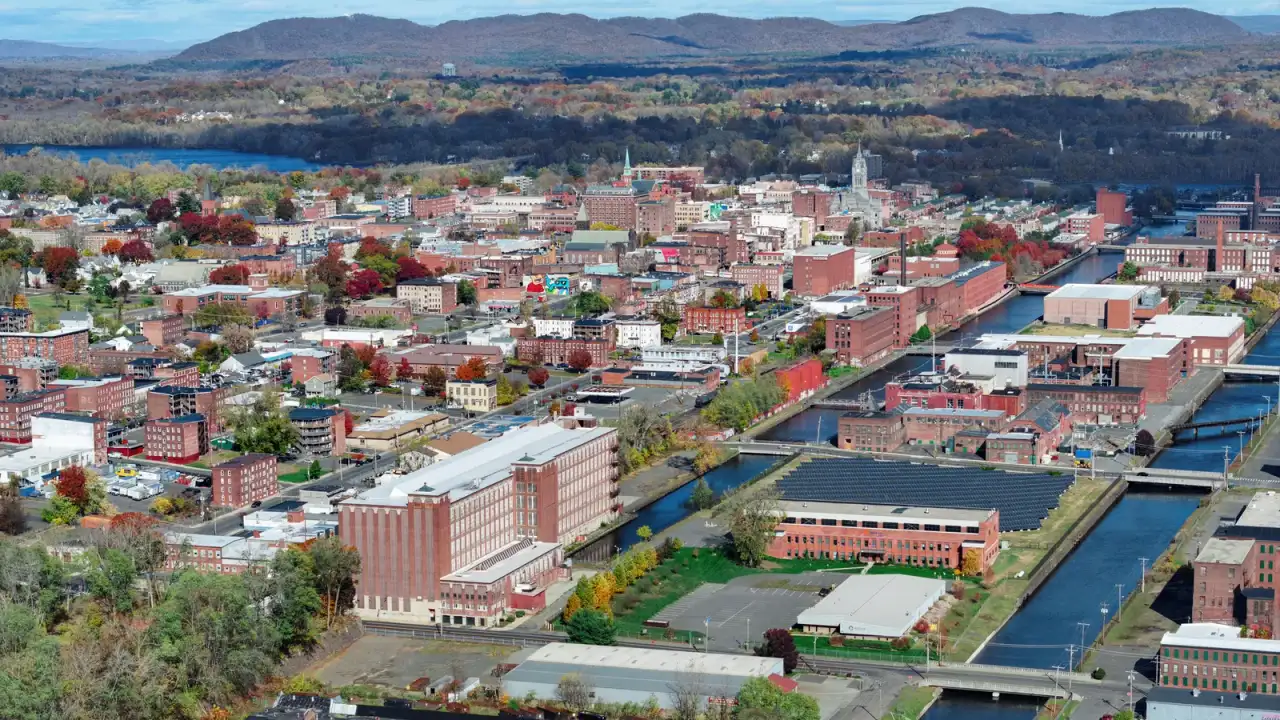
Holyoke was laid out as a planned mill city, built around a 19th-century canal system that once powered its paper and textile mills, and the housing that went up alongside those canals still defines most of the drywall work here. The Flats, Churchill, and South Holyoke hold dense, tightly packed tenement and triple-decker buildings that were built to house canal-era mill labor, and the great majority of that stock is still original lath and plaster. Springfield Elite Drywall & Plaster sees the same pattern block after block: ceilings that have cracked and sagged over a century of settling, walls with hairline cracking around windows and doorways, and plaster that’s pulled away from the lath entirely in the worst units. A straight patch and skim coat handles most of the ordinary wear, matched to the existing finish so the repair blends in. Where a ceiling or wall has failed past that point, sagging in sheets rather than just cracking, converting that section from plaster to drywall is the more durable fix than another round of patching that won’t last.
Because this housing predates 1940 almost across the board, lead paint is a standing assumption rather than something to test for case by case. Any repair that disturbs painted plaster or trim in the Flats, Churchill, or South Holyoke falls under EPA RRP lead-safe work practices, and Springfield Elite Drywall & Plaster runs every pre-1978 Holyoke job that way as a default: contained work areas, careful cleanup, and documentation, in keeping with both federal rules and the Massachusetts State Building Code’s expectations for older housing stock.
Holyoke’s rental market adds a second defining fact: very high tenant turnover in the dense mill-city core. Landlords and property managers, not individual homeowners, are the volume buyer for plaster and drywall repair here, and the job almost always comes with a deadline, a unit needs to be patched, painted, and ready before the next lease starts. That turnover pace is different from a homeowner’s remodel schedule, and it shapes how Springfield Elite Drywall & Plaster staffs and scopes work in these neighborhoods.
The canal system and the Connecticut River running along the city’s edge bring a related concern: older foundations and first-floor walls near the canals and river see recurring dampness, especially after heavy rain or spring runoff, and ordinary drywall doesn’t hold up in that environment. Mold-resistant board and addressing the moisture source directly are the standard fix in these lower-lying blocks.
Up the hill, the Highlands tells a different story. The housing here is larger, more spread out, and less rental-heavy, and the drywall calls skew toward remodel work, basement finishing and additions, rather than turnover repair. Wistariahurst Museum and the Holyoke Mall sit as easy landmarks for placing a job, Mount Tom rises along the western edge of the city, and downtown still carries the Volleyball Hall of Fame, marking Holyoke as the sport’s birthplace. Whether the job is a canal-era tenement ceiling in the Flats or a finished basement in the Highlands, Springfield Elite Drywall & Plaster treats Holyoke’s pre-1940 plaster stock and its rental turnover pace as the two facts that shape nearly every job in the city.
Neighborhoods we work in
- The Flats — Dense canal-era tenement blocks built directly for mill labor housing, among the oldest and most rental-heavy stock in the city.
- Churchill — Older triple-decker and multi-family housing just above the canals, similar turnover pressure to the Flats.
- South Holyoke — Dense pre-1940 tenement stock near the historic mill district, heavy landlord ownership.
- The Highlands — More affluent hillside neighborhood with larger single-family and multi-family homes, less rental turnover.
Why Holyoke homes need what they need
Very high rental turnover in the Flats, Churchill, and South Holyoke's dense tenement stock
Landlords and property managers need units patched and ready between tenants on a compressed timeline, not a leisurely remodel schedule
Canal-era pre-1940 lath-and-plaster construction throughout the mill-city core
Original plaster has had a century to crack, sag, and separate from the lath, and much of it is past the point where patching alone holds
Pre-1940 painted plaster and trim citywide
Any repair disturbing painted surfaces in this era of housing falls under EPA RRP lead-safe work practices as a default, not an exception
Connecticut River and canal-adjacent low-lying blocks
Older foundations near the river and canal system see recurring moisture, which plain drywall doesn't hold up to
Larger, less dense housing stock in the Highlands
Homeowners here are more likely doing remodel-driven installation and finish work than turnover-driven repair
What we’re called for most in Holyoke
Local resources for Holyoke homeowners
- Building / Permit Dept — Building Department inspectors keep set morning and afternoon office hours for walk-in permit questions.
- Assessor / Property records
- FEMA flood map (Connecticut River corridor)
- Historic district commission — Maintains an inventory of architecturally and historically significant buildings citywide.
Frequently asked questions
My triple-decker in the Flats has ceilings that keep cracking between tenants. Is patching worth it or should I convert to drywall? +
It depends on how far the plaster has separated from the lath. Isolated cracks and soft spots usually patch and skim coat cleanly to match the rest of the ceiling. Once several sections are failing or the plaster is sagging away from the lath, Springfield Elite Drywall & Plaster typically recommends converting that section to drywall, since re-patching a ceiling that's already structurally failing doesn't hold on a turnover timeline.
Do I need a permit for interior plaster repair in a Holyoke rental unit? +
Holyoke's Building Department handles permitting for the city, and most interior plaster and drywall repair inside an existing unit doesn't require the same review as structural or exterior work. Springfield Elite Drywall & Plaster confirms permit requirements with the department before starting any job where it's unclear.
My building is on the Holyoke Historical Commission's inventory. Does that affect interior drywall work? +
Usually not. The commission's review generally applies to exterior changes or structurally significant alterations, not routine interior plaster and drywall repair. Springfield Elite Drywall & Plaster can flag anything that might need a check with the commission before work starts.