
Signs you need this
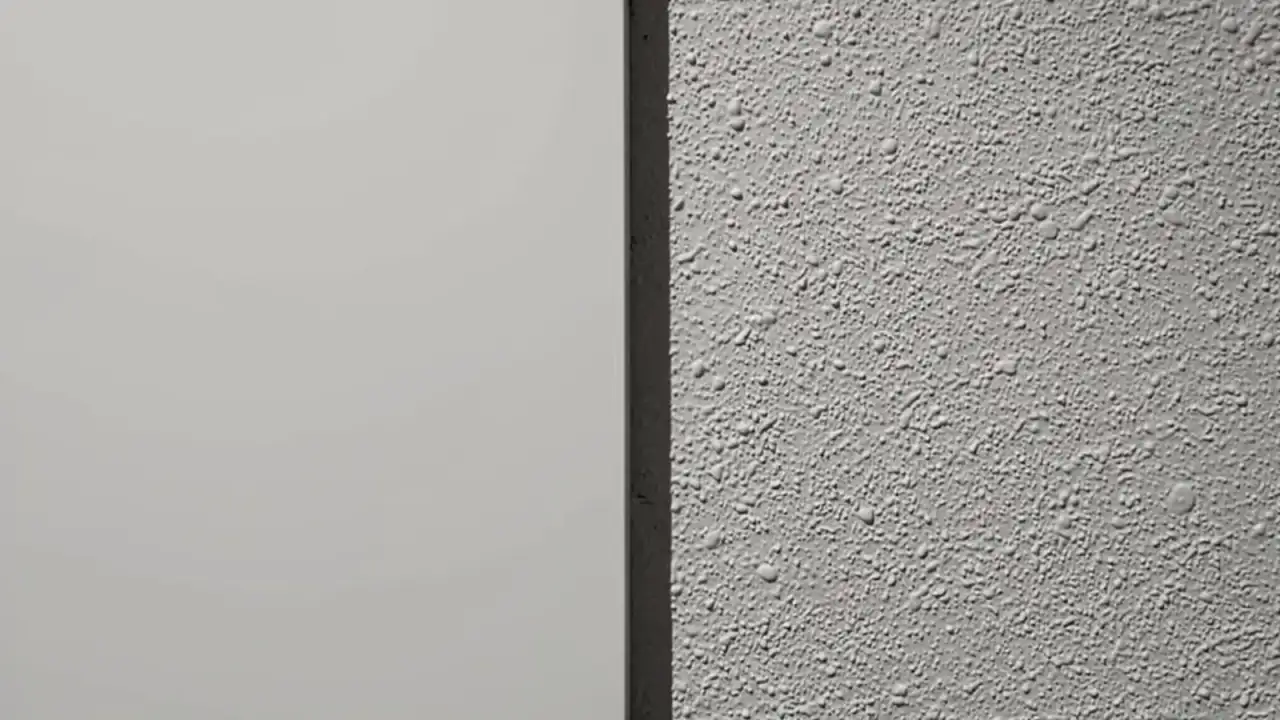
- • A drywall patch that's perfectly smooth sitting against a wall or ceiling covered in knockdown or orange-peel texture, visible the moment the light hits it
- • A repaired area that picture-frames, where the edge of the patch reads as a faint rectangle or halo even after painting
- • A previous handyman or DIY repair that fixed the hole but never matched the surrounding texture at all
- • Sheen mismatch around a patch once painted, where the texture difference shows up more under certain paint finishes than others
The Invisible-Patch Problem
A drywall repair can be structurally perfect and still fail the only test that matters to the person living with it: does it disappear. Most textured walls and ceilings in Springfield, especially the knockdown and orange-peel finishes common across homes built or renovated from the 1980s onward, were never sprayed by the same hand or machine setting twice, which means every wall has its own subtle rhythm to its texture. A patch that’s taped, mudded, sanded smooth, and painted flat is a good drywall repair and a bad texture match, because smooth next to textured reads as a patch under almost any lighting, no matter how clean the seam underneath is. This is the exact gap Springfield Elite Drywall & Plaster works to close: the repair itself is table stakes, and the texture match is the actual craft.
Why North End Three-Deckers See This Constantly
The North End’s Brightwood and Memorial Square three-decker stock generates a steady stream of small patch work: a plumber’s access cut for a supply line, an electrician fishing a new circuit, a shelf bracket or wall mount that leaves anchor holes when a tenant moves out. Landlords turning a unit over between tenants are usually working against a tight timeline to a repaint and a new lease start, and a visible patch under fresh paint is the kind of thing a new tenant notices on day one. Matching the texture correctly the first time, rather than patching and hoping the paint hides it, is what keeps that turnover on schedule and keeps the finished unit looking cared for rather than repaired.
Reading the Pattern Before Touching the Patch
Knockdown and orange-peel are both sprayed textures, but they behave differently once a repair is involved. Orange peel is a fine, even stipple that’s relatively forgiving to reproduce with the right nozzle setting and pressure. Knockdown starts as a heavier spray pattern that then gets partially flattened with a wide knife before it fully sets, and that flattening step is where the real variation lives: how hard the original installer pressed, how long they waited before knocking it down, and how heavy the initial spray was all shape the final look. Springfield Elite Drywall & Plaster studies the surrounding texture’s scale and spacing before mixing anything, and always runs a test patch on scrap board or an inconspicuous section of the same wall to dial in the tool and technique before it ever touches the visible repair.
Feathering the Edge So There’s No Line
Even a well-matched texture pattern can still show a visible edge if the transition between old and new isn’t feathered properly. The new texture needs to taper into the surrounding surface gradually rather than stopping at a hard boundary, which is what creates that faint “picture frame” outline homeowners often describe around an otherwise decent patch. Getting this right takes controlling how far the new texture extends past the actual drywall repair and blending the density of the pattern at that outer edge, not just matching the pattern itself in the center of the patch.
Paint Sheen Is Part of the Match, Not an Afterthought
A texture match that looks seamless right after application can still show up once paint goes on, particularly with satin or semi-gloss finishes that catch and reflect light differently across even minor texture variation. Flat and matte sheens are more forgiving. This is why the finished patch gets evaluated under the room’s actual paint sheen and lighting, not just checked dry and unpainted, since that’s the condition it actually has to hold up in once the job is done.
Materials & standards
Products & materials we use
- USG Sheetrock
- ToughRock
- Gold Bond
Standards & codes we work to
- GA-214 finish Levels 0-5
- ASTM C1396
What the terms mean
- knockdown texture
- orange-peel texture
- texture matching
- mud and tape
- corner bead
- FibaTape
- feathering
- test patch
Options & variants
| Option | When it applies | Cost |
|---|---|---|
| Knockdown texture match | Existing wall or ceiling has a knockdown pattern (flattened joint compound splatter) | Priced by patch size; knockdown is harder to match than orange peel due to hand variability |
| Orange-peel texture match | Existing surface has a fine, stippled orange-peel spray pattern | Generally lower cost than knockdown matching |
| Ceiling texture match | Patch is on a ceiling rather than a wall | Priced above a comparable wall patch for overhead access and technique differences |
| Rework of a prior mismatched patch | A previous repair is visibly smooth or wrong-patterned against the surrounding texture | Includes removing or feathering the old patch before rematching, priced above a first-time match |
What affects cost
- • Size of the patch and how much surrounding texture needs feathering to blend it in
- • Texture type: knockdown patterns vary more from wall to wall than orange peel, making a precise match harder to dial in
- • Whether a prior repair needs to be reworked before the new texture goes on, rather than matching a clean substrate
- • Paint sheen on the finished wall, since higher-gloss paint makes texture mismatch more visible than flat or matte finishes
- • Whether the patch is on a ceiling versus a wall, given the different technique and overhead access involved
What to expect
- 1
Assessment
Of the existing texture pattern, its scale and spacing, and the substrate repair already done or still needed.
- 2
Drywall repair
Taping, mudding, and sanding completed first if it hasn't already been done by another trade.
- 3
Test patch
A test patch of texture is applied in an inconspicuous spot to dial in the right tool, pressure, and pattern before touching the visible repair.
- 4
Texture application
Matching texture is applied to the patch area using the technique that reproduces the surrounding pattern, not a generic spray.
- 5
Feathering
Edges are feathered so the transition between old and new texture doesn't create a visible line or halo.
- 6
Prime and test-paint
Primed and, where the homeowner wants it, test-painted to confirm the patch disappears under the room's actual lighting.
When this isn’t the right call
- If a whole ceiling is covered in heavy stippled popcorn texture that needs removing rather than matching, that's a popcorn ceiling removal job
- If the goal is a dead-flat designer wall finish rather than matching the existing texture, that's a skim coat and Level 5 finish job
- If the damage traces back to an active leak rather than a cosmetic patch, that's a water damage drywall repair job
Frequently asked questions
Can any texture be matched, or are some patterns impossible? +
Most knockdown and orange-peel patterns can be matched closely with the right tool and technique. The harder cases are older, hand-applied textures with a lot of natural variation, which is exactly why a test patch happens before the visible repair.
Why does my DIY or handyman patch still look bad even though the hole is fixed? +
The drywall repair itself was likely fine; what's missing is the texture step. A smooth patch against a textured wall reads as a patch no matter how well the mud and sanding underneath were done.
What's the difference between matching knockdown and orange-peel texture? +
Orange peel is a finer, more consistent stippled pattern that's relatively straightforward to reproduce. Knockdown involves spraying a heavier pattern and then flattening part of it with a knife, which introduces more variation from wall to wall and takes more judgment to match.
Does paint sheen actually affect how visible a texture mismatch is? +
Yes. Flat and matte paint hide small texture differences better than satin or gloss, which catch light differently across a mismatched patch and make it more visible after painting, not less.
Is ceiling texture matching different from wall texture matching? +
The pattern-matching principle is the same, but ceiling work involves overhead application and a different vantage point for judging the match, which changes the technique and adds to the cost.
Can you fix a patch that a previous contractor already got wrong? +
Yes. That typically means feathering out or reworking the existing mismatched patch first, then reapplying texture correctly, rather than layering a second attempt directly over the first.
How do you make sure the new texture actually matches before committing to the whole patch? +
A test patch goes down first in an inconspicuous area, using the same tool and technique planned for the real repair, so the pattern is confirmed before it's applied to the visible spot.