
Signs you need this
- • A homeowner planning a remodel who needs old drywall or plaster fully removed before new construction starts
- • A general contractor who needs the tear-out phase of a renovation handled cleanly and on schedule so framing and rough-in can start
- • Original lath-and-plaster walls or ceilings in an older home that need to come out entirely rather than be repaired
- • A basement or addition project in Sixteen Acres or East Forest Park where old material has to be cleared before the new layout goes in
What Actually Happens Before the New Wall Goes In
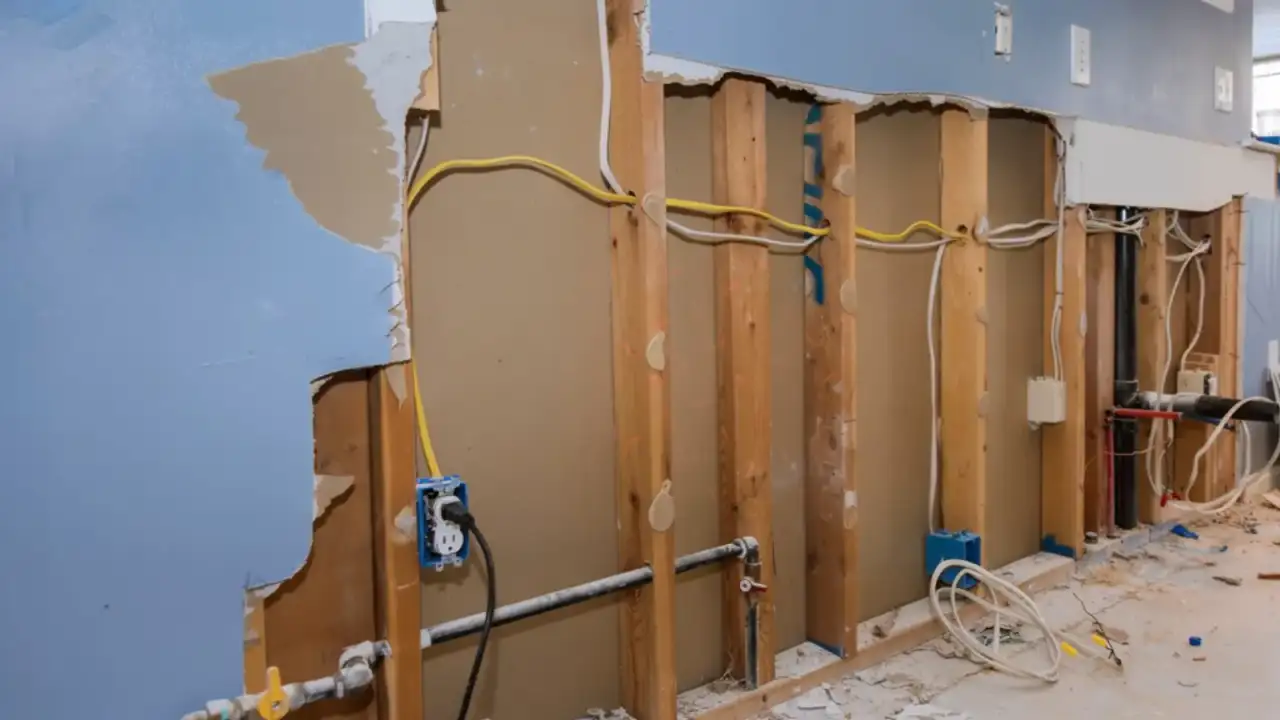
Every renovation, addition, or basement finish starts with the part nobody photographs for the after picture: getting the old material out. In Springfield, that step carries more variables than it looks like from the outside, because the city’s housing stock spans everything from mid-century suburban construction to plaster walls installed before the First World War.
Suburban Remodels: Basements and Additions
Sixteen Acres and East Forest Park make up Springfield’s mid-century suburban ring, and a lot of the demand there is remodel-driven: finishing an unfinished basement, adding a room, or opening up a layout that hasn’t been touched since the house was built. These projects usually involve standard drywall, sometimes paired with older paneling or ceiling tile that came before the current layout, and the tear-out phase is about speed and clean handoff to framing and insulation, since the renovation schedule is usually tight and sequential.
Plaster Demolition Is a Different Job
Original lath-and-plaster construction, common across Forest Park’s 1890–1925 stock and the McKnight Historic District’s Victorian-era homes, doesn’t come out the same way modern drywall does. Plaster is heavier per square foot, it’s keyed into wood lath strips rather than simply screwed to studs, and the lath itself often needs to be assessed and removed separately once the plaster is off. Debris volume is higher, dust is finer, and the removal pace is generally slower and more deliberate than pulling modern board off a wall. Treating a full plaster demolition like a standard drywall tear-out under-scopes the job and usually blows the schedule.
Lead-Safe Handling on Pre-1978 Construction
A large share of Springfield’s housing, including most of the McKnight and Forest Park districts, predates 1978, which means lead paint is a real possibility in the layers being removed. EPA RRP lead-safe practices apply on that vintage of construction: containment, controlled removal, and proper cleanup, not just because it’s required but because it protects everyone in the building during and after the work. Asbestos-age popcorn ceiling texture gets the same treatment: tested before it’s disturbed, since texture applied before the late 1970s can contain it.
Working Alongside a General Contractor’s Schedule
For general contractors managing a full renovation, the demolition phase is one scoped piece of a longer sequence: tear-out has to finish before framing, rough electrical, and insulation can start, and any delay here pushes the whole project back. Springfield Elite Drywall & Plaster scopes demolition as its own coordinated phase, with a clear start and finish tied to the rest of the schedule, so a general contractor isn’t left guessing when the space will actually be ready to hand off.
Dust Containment in Occupied Buildings
Not every demolition happens in an empty house. Where adjacent rooms, units, or floors stay occupied during the work (a common situation in Springfield’s three-decker and small-multifamily stock, and in tenant-improvement work tied to the city’s hospital and college-anchored commercial base), containment barriers and controlled airflow keep dust from spreading beyond the work zone. That containment discipline matters just as much on a homeowner’s basement project as it does on a larger commercial tear-out.
Debris, Disposal, and Leaving the Space Ready
The job isn’t finished when the last piece of board comes down. Debris gets bagged and contained through the process, not left in a pile until the end, and hauled for proper disposal rather than passed off as someone else’s problem. A demolition scope that ends with a broom-clean space, framing exposed and ready for the next trade, is what actually keeps a renovation timeline intact.
Materials & standards
Products & materials we use
- Durock/cement board
- USG Sheetrock
- DensGlass
Standards & codes we work to
- EPA RRP (lead-safe, pre-1978)
- MassDEP
- Massachusetts State Building Code (780 CMR)
What the terms mean
- lath and plaster
- plaster demolition
- shaft wall
- demising wall
- popcorn ceiling removal with asbestos-age testing
- tear-out
- dust containment
Options & variants
| Option | When it applies | Cost |
|---|---|---|
| Partial tear-out | Single room or section, targeted demolition | Lower cost, priced per job |
| Full room or basement gut | Basement finish, addition, or full remodel scope | Moderate to higher, more material and disposal |
| Lath-and-plaster removal | Original plaster ceilings or walls in older homes | Higher labor intensity, often paired with lead-safe handling |
| Lead-safe demolition (pre-1978) | Homes built before 1978 requiring EPA RRP practices | Adds containment and handling requirements |
What affects cost
- • Whether the material is standard drywall or original lath-and-plaster, since plaster removal is more labor-intensive
- • Square footage and scope: a single wall versus a full basement or gut renovation
- • Whether the home was built before 1978, requiring lead-safe containment and handling
- • Debris volume and disposal requirements
- • Access to the work area and whether dust containment is needed for occupied adjacent spaces
What to expect
- 1
Assess scope and age requirements
Springfield Elite Drywall & Plaster assesses the scope, confirms whether the home's age requires lead-safe handling, and checks for older materials like asbestos-age popcorn texture before starting.
- 2
Set up dust containment
Dust containment is set up to protect adjacent occupied areas.
- 3
Remove material methodically
Material is removed methodically, with plaster and lath handled differently than modern drywall given the added weight and different fastening.
- 4
Bag and haul debris
Debris is bagged, contained, and hauled for proper disposal.
- 5
Leave the space ready
The space is left broom-clean and ready for the next trade, whether that's framing, insulation, or new drywall.
- 6
Coordinate with the schedule
For general contractors, progress and completion are coordinated against the renovation schedule.
When this isn’t the right call
- If only a single hole, dent, or small area needs repair rather than a full tear-out, drywall repair and patching is the better fit.
- If the ceiling has isolated sagging, staining, or cracking rather than a full removal scope, ceiling repair is the right call.
- If the issue is a single recurring crack rather than material coming out entirely, drywall crack repair addresses it directly.
Frequently asked questions
My house is older. Does that change how you handle the demolition? +
Yes. Homes built before 1978 require lead-safe handling under EPA RRP practices, and original lath-and-plaster construction, common in Springfield's older housing stock, is heavier and removed differently than modern drywall.
I'm a general contractor. Can you handle just the tear-out phase and coordinate around my schedule? +
Yes, that's a common scope. Springfield Elite Drywall & Plaster handles the demolition and disposal piece and coordinates timing against the rest of the renovation schedule.
What happens to the debris? +
Material is bagged and contained during removal, then hauled for proper disposal rather than left on site for another trade to deal with.
Do you check for asbestos before removing old ceiling texture? +
Popcorn ceiling texture from before the late 1970s can contain asbestos, so age-appropriate testing happens before that material is disturbed.
Will dust from the demolition affect the rest of my house while work is happening? +
Containment is set up around the work area specifically to protect adjacent occupied rooms from dust during removal.
Is plaster removal really that different from drywall removal? +
Yes. Plaster over lath is heavier, more labor-intensive to remove, and often requires more careful handling of the lath and framing underneath, which is reflected in how the job is scoped and priced.